

Advanced Peptides UK supplies research materials only. 18+ Products not for human consumption.
A Beginner’s Guide to Understanding Their Role in Science
Published: 6 August 2026
Reading time: 8 minutes
Peptides are an important part of biology and biomedical research, yet many people are unfamiliar with what they actually are. Whether you’re reading about new scientific discoveries, biotechnology, or pharmaceutical development, peptides are frequently mentioned because of their wide-ranging roles in living organisms.
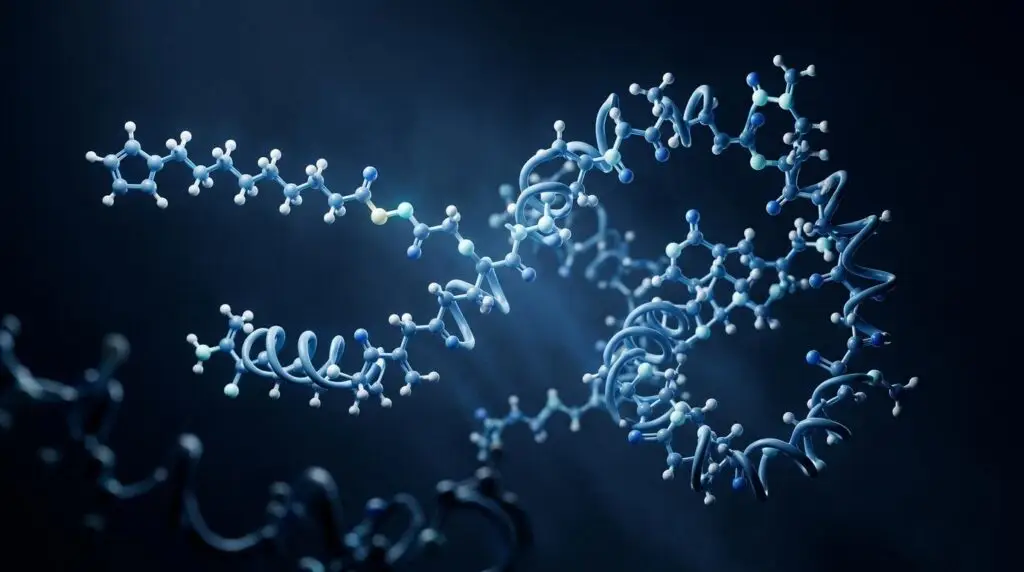
In simple terms, peptides are short chains of amino acids joined together by chemical bonds known as peptide bonds. Although they are smaller than proteins, peptides perform many essential biological functions, including cell signalling, hormone activity, and immune responses.
This guide explains what peptides are, how they differ from proteins, how they are produced, and why they have become an important area of modern scientific research.
Peptides are molecules made from amino acids—the building blocks of proteins. When two or more amino acids are linked together by peptide bonds, they form a peptide.
Scientists generally classify peptides as chains containing between 2 and approximately 50 amino acids, while longer chains are usually referred to as proteins or polypeptides. Although the exact cut-off varies depending on the scientific context, this distinction is widely accepted.
Peptides occur naturally in plants, animals, and microorganisms and participate in countless biological processes.
There are 20 standard amino acids used to build most proteins and peptides in the human body. Each amino acid has a unique chemical structure, allowing different combinations to create molecules with different properties and functions.
Think of amino acids as individual letters of an alphabet. When arranged in different sequences, they create entirely different “words”—or, in this case, peptides with distinct biological roles.
Although the terms are sometimes used interchangeably, peptides and proteins are not the same.
| Peptides | Proteins |
|---|---|
| Usually contain 2–50 amino acids | Typically contain more than 50 amino acids |
| Smaller and simpler | Larger and more structurally complex |
| Often involved in signalling | Perform a wide range of structural and functional roles |
| May not require extensive folding | Usually fold into complex three-dimensional structures |
Both are made from amino acids, but proteins are generally larger and often have more complex structures.
Peptides serve many important functions throughout biology. Depending on their sequence and structure, they can:
Because different peptides have different biological properties, researchers continue to investigate their roles in physiology and disease.
Not all peptides are produced in the same way.
Natural peptides are produced by living organisms through normal biological processes. They are found throughout the human body and many other forms of life.
Synthetic peptides are manufactured in laboratories using specialised chemical techniques. These peptides are widely used in research, analytical testing, and the development of peptide-based medicines.
One of the most common manufacturing methods is solid-phase peptide synthesis (SPPS), which enables researchers to assemble peptide chains with high precision.
Peptides have become an important focus of scientific research because they are involved in many biological systems. Researchers study peptides to better understand cell biology, molecular signalling, immunology, and drug development.
Some peptide-based medicines have been approved for specific medical uses, while many other peptides remain under investigation. As with any area of biomedical science, ongoing research is needed to determine the safety and effectiveness of individual compounds.
Not quite. Proteins are made from amino acids, but peptides are generally much shorter than proteins.
No. The biological activity of a peptide depends on its amino acid sequence and structure. Different peptides can perform very different roles.
No. While some peptide-based therapies have been successfully developed, many peptides investigated in laboratory or early-stage studies do not ultimately become approved treatments.


Order with confidence from a UK-based supplier focused on clear specifications, secure checkout and research-use compliance.
Products are supplied for laboratory research use only. Not for human consumption.